Genuine Leather vs Faux Leather: The Definitive Truth Guide
The Great Debate: Authenticity vs. Imitation
In the modern marketplace, lines are blurred. You'll see terms like "vegan leather," "eco-leather," "bonded leather," and "genuine leather" thrown around, often confusing consumers. Is faux leather really more sustainable? Is genuine leather worth the price tag? This definitive guide strips away the marketing jargon to compare genuine and faux leather on every metric that matters: durability, aesthetics, environmental impact, and cost.
Definitions: What Are We Talking About?
Genuine Leather: A natural material created by tanning animal rawhide and skins. It preserves the natural fiber structure of the skin, which gives it strength and breathability. Common sources are cattle, sheep, goat, and buffalo.
Faux Leather (Synthetic): A man-made material designed to mimic the look and feel of leather.
- PU (Polyurethane) Leather: A plastic coating applied to a fabric backing (cotton or polyester). It is flexible and porous.
- PVC (Polyvinyl Chloride) Leather: A plastic coating with more chemical stabilizers. It is tougher but less breathable and more "plastic" feeling.
Round 1: Durability & Longevity
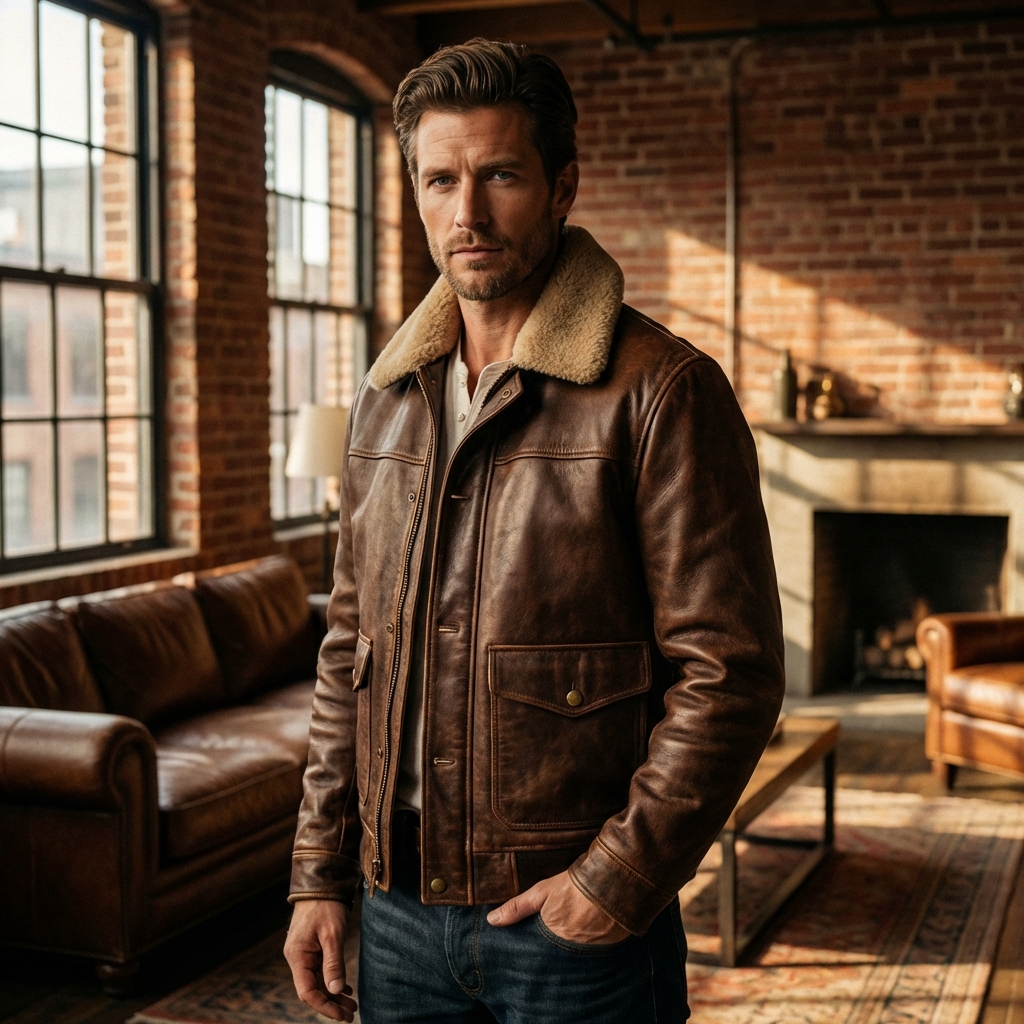
Genuine Leather: The clear winner. Leather fibers are naturally interwoven and incredibly strong. A high-quality leather jacket can last 10, 20, or even 50 years. It resists tearing and punctures. Crucially, leather ages. It doesn't wear out; it wears in. Scratches and creases become part of its character (patina).
Faux Leather: Typically lasts 2-5 years. Because it is a plastic coating, it is prone to cracking and peeling, especially at stress points (elbows, collar). Once the plastic coating cracks, it cannot be repaired. It does not develop a patina; it simply degrades.
Round 2: Comfort & Breathability
Genuine Leather: Being a natural skin, leather is porous. It breathes. This allows air and moisture to pass through, preventing you from getting clammy. Over time, heat and movement cause leather to mold to your body shape, becoming like a second skin.
Faux Leather: Plastic does not breathe. Wearing a PU or PVC jacket on a warm day can feel like wearing a plastic bag—heat and sweat get trapped inside. It does not stretch or mold to the body significantly.
Round 3: Aesthetics & Feel
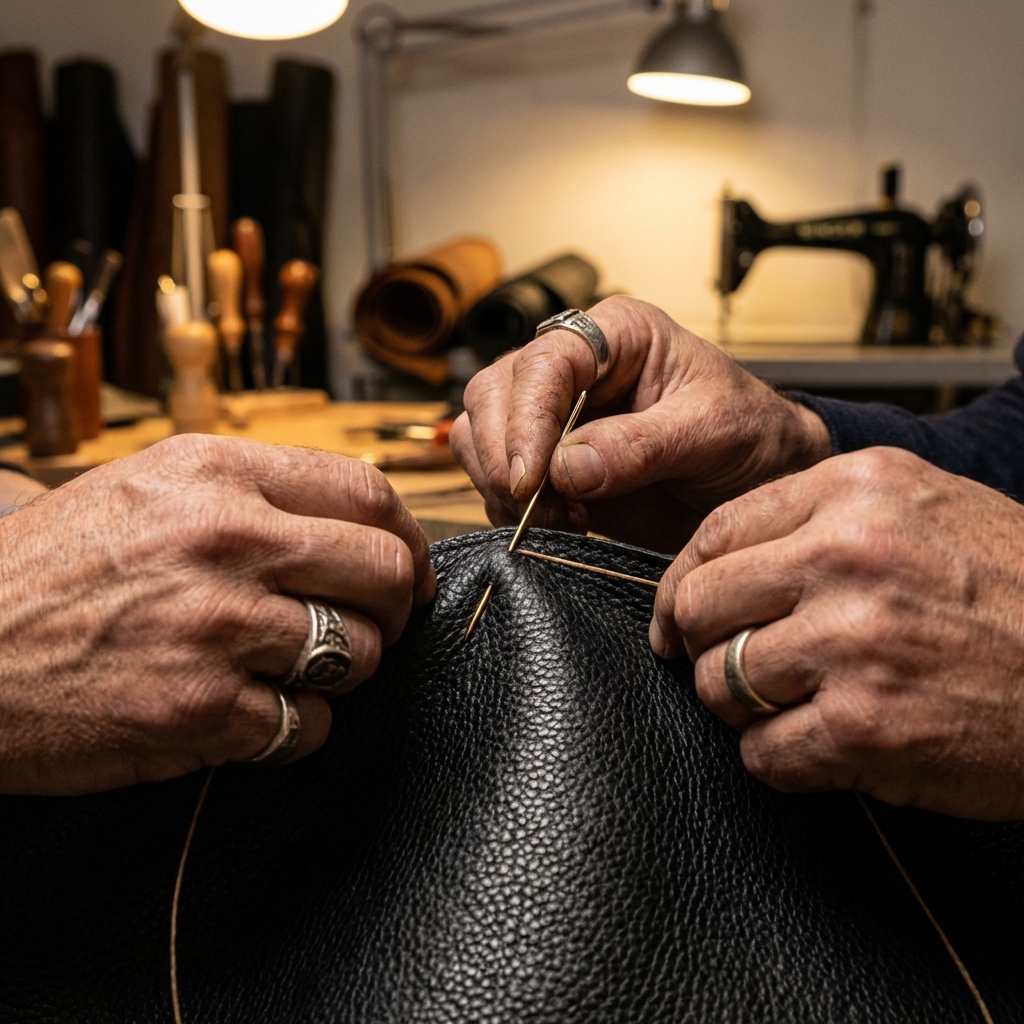
Genuine Leather: Has a distinct, rich smell that is impossible to replicate perfectly. The touch is warm, soft, and slightly grippy. The surface has irregular grain patterns, pores, and natural imperfections that denote authenticity.
Faux Leather: Often smells of chemicals or plastic. To the touch, it can feel cold and unnaturally smooth or rubbery. Manufacturers emboss grain patterns onto it, but they often look too uniform and repetitive.
Round 4: Environmental Impact (The Complex One)
Genuine Leather:
- Pros: It is a byproduct of the meat industry (hides would otherwise go to landfill). It is biodegradable (vegetable-tanned leather breaks down relatively quickly). It is durable, meaning fewer items need to be produced/bought (slow fashion).
- Cons: Tanning can be chemically intensive (chrome tanning uses heavy metals). Cattle farming has a high carbon and water footprint.
Faux Leather:
- Pros: No animal products used (vegan). Lower water footprint in production.
- Cons: It is essentially plastic (petroleum-based). It is not biodegradable and contributes to microplastic pollution. Its short lifespan means more items end up in landfills ("fast fashion" cycle). Chemical solvents used in production are toxic.
Verdict: "Vegan" doesn't always mean green. A plastic jacket that lasts 2 years is often worse for the planet than a leather jacket that lasts 20.
Round 5: Price
Genuine Leather: High upfront cost ($200 - $1000+). However, the "Cost Per Wear" is low due to its longevity.
Faux Leather: Low upfront cost ($50 - $150). High "Cost Per Wear" as it needs frequent replacement.
How to Spot the Difference (The Test)
Don't trust the label? Here’s how to check:
- The Water Test: Drop a small amount of water on the surface. Genuine leather absorbs it (darkens slightly). Faux leather repels it (beads up).
- The Edge Test: Look at the cut edges (seams). Real leather has rough, fibrous edges. Faux leather usually has smooth edges or visible layers of fabric backing.
- The Texture Test: Press your finger into the material. Real leather wrinkles like skin. Faux leather depresses stiffly without wrinkling.
- The Fire Test (Caution!): Real leather resists fire and smells like burnt hair. Faux leather melts and smells like burning plastic. (Do not do this in a store!)
Conclusion
At IndiFash, we stand firmly on the side of genuine leather. We use premium Full-Grain and Top-Grain leathers because we believe in creating products that last. While faux leather has its place for those who strictly avoid animal products, for the connoisseur of style, durability, and comfort, nothing beats the real thing.