Full-Grain vs. Top-Grain Leather: What's the Actual Difference?
Full-Grain vs. Top-Grain Leather: What's the Actual Difference?
The global leather industry is saturated with opaque terminology and misleading marketing claims. Understanding hide anatomy and fiber density is the only way to ensure you invest in authentic, heirloom-grade craftsmanship.
When browsing luxury leather jackets, briefcases, or handmade boots, you will encounter descriptors such as 'Full-Grain', 'Top-Grain', 'Genuine Leather', and 'Split Hide'. In this technical guide, our master tanners and material scientists deconstruct the anatomy of a hide, how each grade is manufactured, and how each performs over decades of real-world use.
1. Histology of a Hide: The Four Anatomical Layers
A bovine hide is approximately 4 to 6 millimeters thick in its raw state. To be converted into supple luxury leather, the hide is mechanically split horizontally into distinct structural layers:
- The Grain (Epidermal Junction): The uppermost 1.0 to 1.5 millimeters of the hide. This layer possesses the highest concentration of tightly interwoven collagen fibers. It is naturally weatherproof, incredibly tear-resistant, and displays unique pores, follicle markings, and natural healed scars.
- The Junction Layer: The transitional boundary between the dense upper grain and the looser fibers below. It contributes to tensile strength and elasticity.
- The Corium (Reticular Layer): The lower middle section consisting of looser, thicker collagen bundles. This layer provides flexibility but lacks the surface density and water-shedding properties of the upper grain.
- The Flesh (Fleshing Split): The bottommost layer in contact with animal subcutaneous tissue. When split away, it forms suede or cheap split leather.
100% Certified Full-Grain Production
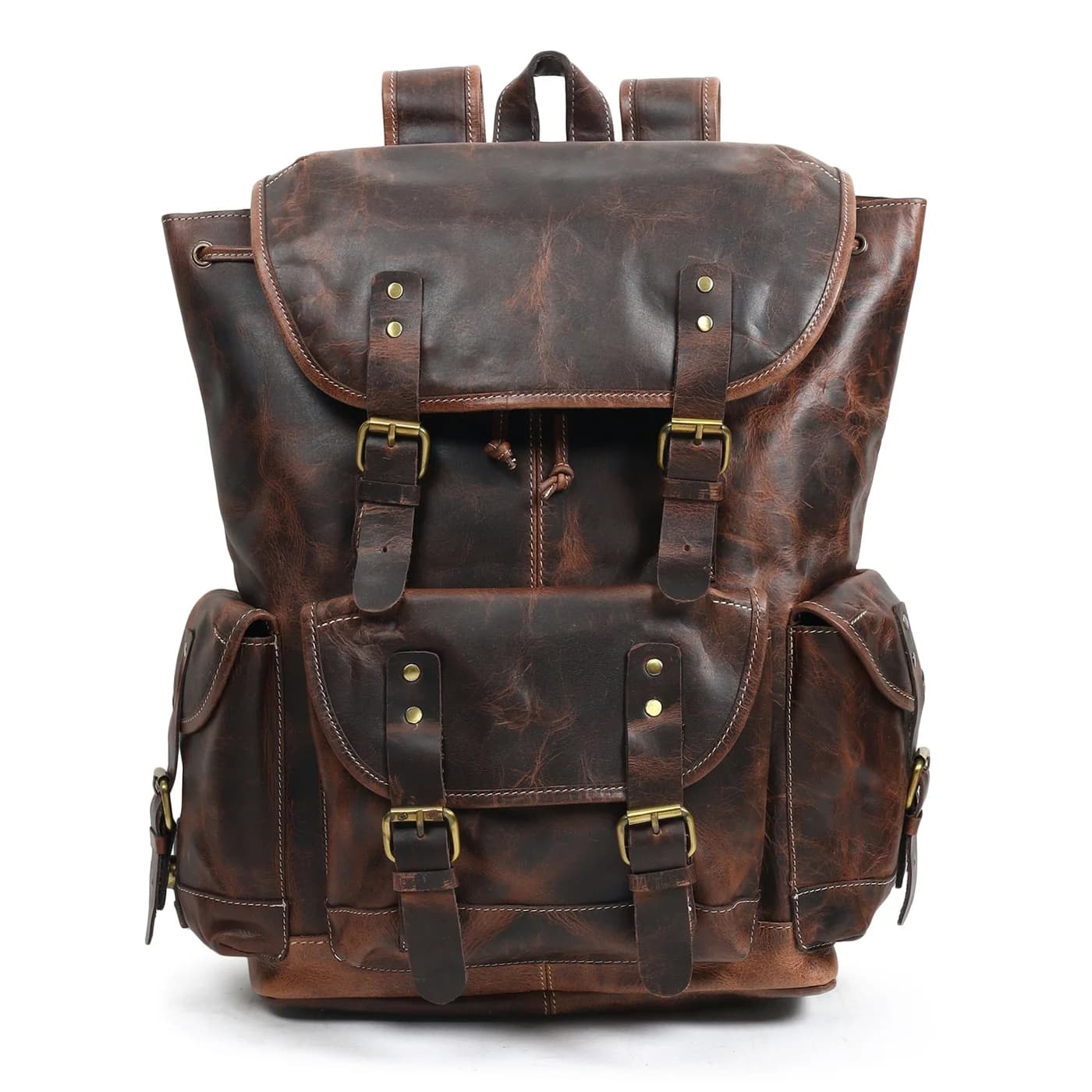
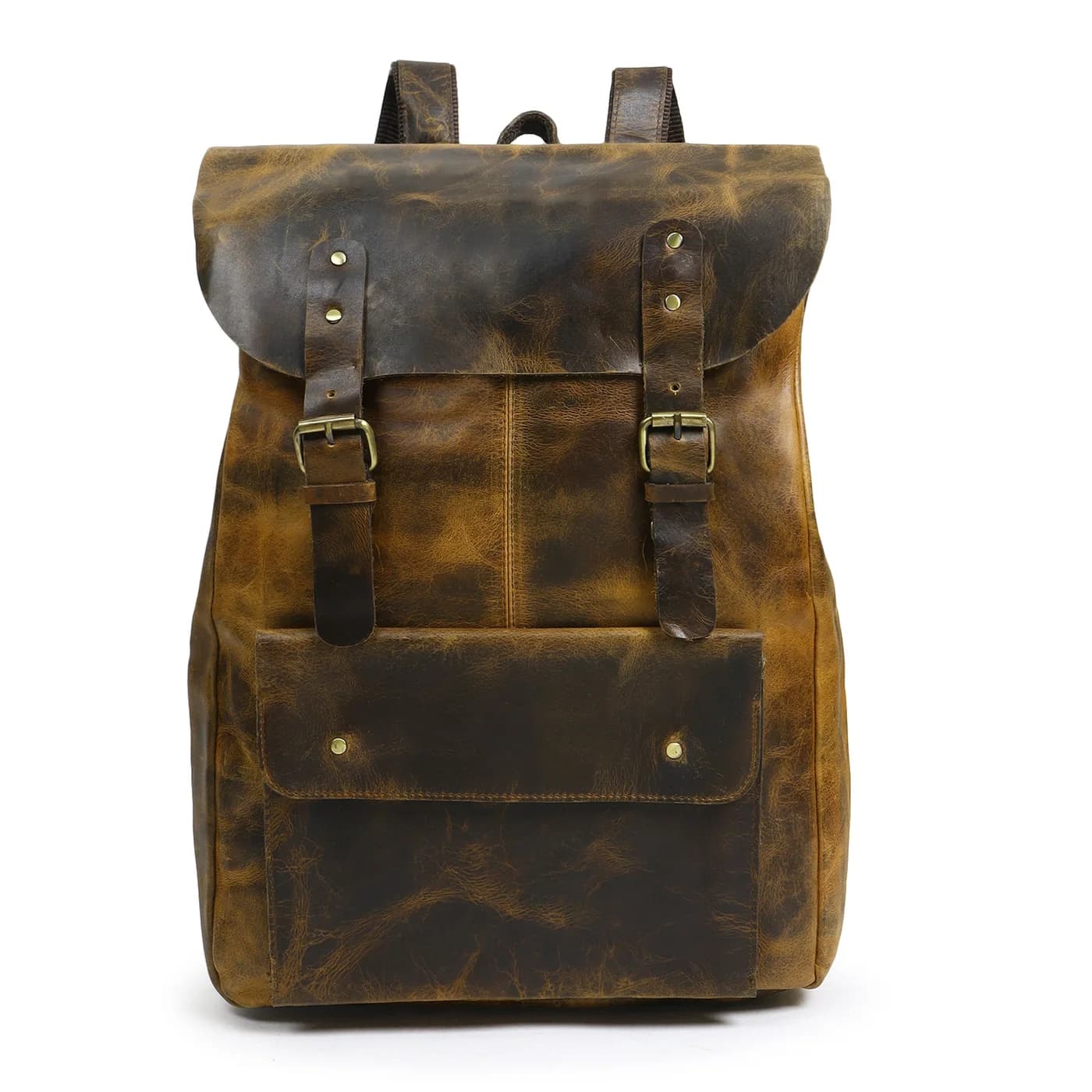
IndiFash strictly rejects corrected grain, split hides, and bonded leathers. Every piece in our collection is bench-crafted from unbuffed, vegetable-tanned full-grain hides sourced from audited tanneries.
2. Full-Grain Leather: The Uncompromised Gold Standard
Full-grain leather utilizes the entire upper grain without any sanding, buffing, or artificial correction. Only the highest-tier 10% to 15% of all raw hides qualify for full-grain grading, as any severe open wounds or branding marks would remain visible on the finished garment.
The Advantages of Full-Grain
- Retains natural breathability and thermo-regulating micropores.
- Unmatched tensile break strength exceeding 250 N/mm².
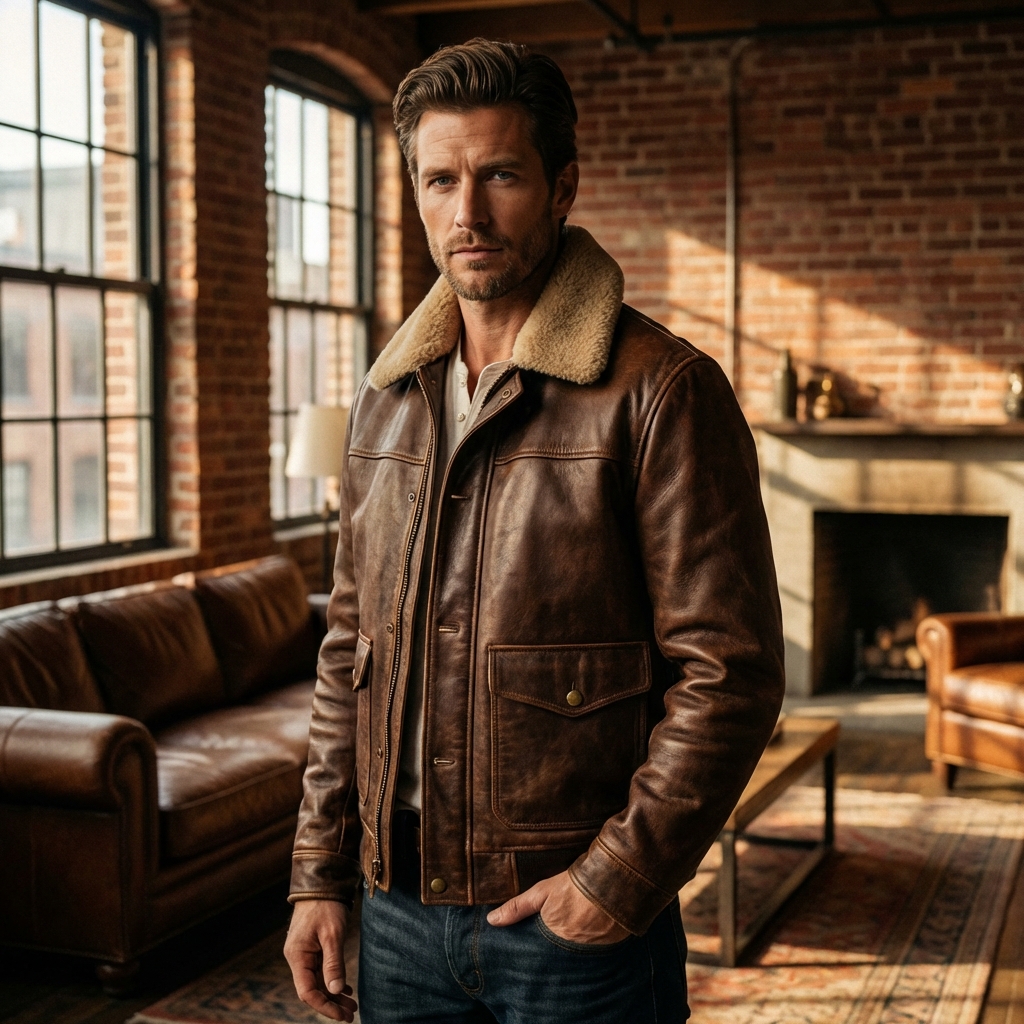
- Develops a deep, lustrous, irreplaceable natural patina over time.
- Self-healing: minor surface scuffs absorb skin oils and buff out cleanly.
- Lasts 30 to 50+ years with proper bi-annual hydration.
Considerations & Character
- Presents natural organic variations, neck wrinkles, and pore textures.
- Demands longer initial break-in time as fibers soften to body warmth.
- Command higher material cost due to rigorous hide selection standards.
- Requires skilled master artisans for hand-skiving and pattern cutting.
3. Top-Grain Leather: The Sanded Compromise
Top-grain leather is the second grade in the hierarchy. Despite its name, top-grain does not preserve the complete top surface. Tanneries take hides with minor insect bites, scratches, or uneven texture, sand off the uppermost 0.2 to 0.5 mm of fiber grain, and apply a polyurethane pigment or stamp an artificial print (such as Saffiano or pebble grain) onto the surface.
While top-grain offers uniform color and high initial stain resistance, sanding away the densest collagen fibers reduces its tensile strength by 30% to 40%. Crucially, because the surface is sealed under synthetic polymers, top-grain leather cannot develop a natural patina. Over years of wear, the artificial surface coat can crack or peel away from the underlying fibers.
4. "Genuine Leather" and Bonded Leather: The Marketing Trap
Consumers frequently assume that a stamp reading "Genuine Leather" denotes certified luxury. In reality, in commercial manufacturing, "Genuine Leather" is a legal minimum, not a hallmark of quality.
It is produced from the weak corium split hides left behind after the top-grain has been shaved off. Because split leather has zero natural grain, manufacturers coat it in heavy acrylic paint or laminate it to polyurethane backings. Within 12 to 24 months of regular flexing, genuine leather items crack, peel, and delaminate beyond repair.
| Criteria | Full-Grain | Top-Grain | Genuine / Split |
|---|---|---|---|
| Surface Processing | 100% Natural, Unaltered | Sanded, Buffed, Polymer Coated | Split Corium, Painted / Laminated |
| Patina Development | Rich, Golden Caramel Aging | Zero Patina (Plastic Sealed) | Degrades / Peels Off |
| Lifespan Expectancy | 30 - 50+ Years | 5 - 10 Years | 1 - 2 Years |
| Tensile Strength | Over 250 N/mm² | 150 - 180 N/mm² | Under 60 N/mm² |
Frequently Asked Questions & Expert Guidance
Q: How can I physically test whether a product is full-grain leather?
A: Inspect the surface under a magnifying lens; full-grain features organic pore irregularities and subtle natural wrinkles. Perform the water droplet test: place a small droplet on an unexposed area; full-grain absorbs moisture within 10 to 20 seconds, while coated top-grain or synthetic leather beads indefinitely.
Q: Does full-grain leather require more maintenance than top-grain?
A: Because full-grain has open, breathable pores, it requires quarterly conditioning with a natural beeswax or lanolin cream to prevent drying. Top-grain is more stain-resistant initially due to its polymer coat, but once it cracks, it cannot be conditioned or repaired.
Q: Why do luxury brands sometimes use top-grain leather?
A: Mass-luxury brands favor top-grain because sanded hides provide 100% color consistency across thousands of handbags, eliminating cutting room waste and customer inquiries regarding natural grain markings.
Q: Is full-grain leather waterproof?
A: Full-grain leather is naturally water-resistant due to dense collagen interlock, but it is not waterproof. Light rain rolls off untreated hides; however, saturating rainfall requires post-dry conditioning. Applying a beeswax leather balm provides robust hydrophobic defense.
Q: What causes full-grain leather to develop a patina?
A: Patina is the result of natural tree tannins oxidizing under sunlight (UV exposure), combined with the hide absorbing ambient lipids, body oils, and friction from regular handling. This process creates a lustrous, golden-amber sheen unique to your personal journey.
Q: Why is genuine leather so cheap in comparison?
A: Genuine leather uses low-grade industrial split hides that cost tanneries a fraction of raw full-grain hides. These thin splits are bonded with adhesives and painted to simulate luxury hides, but lack structural longevity.
Q: What is corrected grain leather?
A: Corrected grain is another term for top-grain leather that has undergone mechanical abrasion (sanding) to eliminate visual imperfections, followed by thermal embossing with a faux pebble or crosshatch pattern.
Explore Handcrafted Leather Outerwear & Accessories
Every garment featured across our journal is meticulously hand-tailored from full-grain hides. Discover bespoke options, custom sizing, and heirloom leather goods crafted in our design studio.
Follow on Google
Add the IndiFash Journal to your preferred sources on Google News for curated updates.
IndiFash Material Experts
Verified Leather Specialist
Sharing technical insights on leather fashion, care, bespoke tailoring, and lifestyle. Dedicated to quality craftsmanship and timeless style.